Listen to us and understand the problem,
before it happens to someone you love.
We dedicate this campaign to Liza, who did not receive help in time.
Our Mission and Goals
The first edition of the campaign took place in September 2025 as a grassroots social initiative. It was created in response to the growing problem of indifference to violence and the lack of action by witnesses. Our goal was, and still is, to educate people on how to respond effectively and safely in dangerous situations and to raise awareness of the serious consequences of inaction.
Dziś kontynuujemy tę misję, pracując nad założeniem fundacji, która pozwoli nam rozwijać działania rozpoczęte podczas kampanii – prowadzić warsztaty, wspierać inicjatywy lokalne i budować kulturę empatii oraz odpowiedzialności społecznej.
Listen: educational lectures
Understand: expert lectures
Act: training
Calendar and workshops
In September 2025, we delivered a series of lectures and workshops as part of the campaign STOP Znieczulicy on the Street. The events featured experts in social psychology, public safety and crisis communication. Participants gained practical knowledge about how to respond to violence and dangerous situations.
The campaign also included first aid and self-defence training, as well as lectures on the bystander effect and social indifference. All events were free of charge and open to everyone interested.
Obecnie kontynuujemy naszą misję, pracując nad fundacją STOP znieczulicy na ulicy, która pozwoli nam rozwijać te działania i organizować kolejne projekty edukacyjne.
You can find archived campaign events below. Thank you to all participants and partners for taking action together against indifference.
When the event took place
13-14 September
20-21 September 2025
Where the event took place
Civitas University
Defilad Square 1, Warsaw
12th floor, Palace of Culture and Science
*Accessible to people with disabilities.
13 September 2025
Tomasz Prałat, MA - Civitas University
The role of opinion leaders and influencers in combating indifference.
The role of opinion leaders and influencers in combating indifference.
In the age of ubiquitous social media, opinion leaders and influencers have a real impact on social attitudes, emotions and decisions. The lecture explores their role as modern catalysts for social change, people who can break through passivity, respond to crises and initiate important public debates. Different types of opinion leaders and the mechanisms of their influence will be discussed, together with specific examples of social campaigns in which influencers helped mobilise communities and encourage social engagement.
Ewa Majka-Janiak
Indifference among those closest to us. A family probation officer perspective.
Indifference among those closest to us. A family probation officer perspective.
Anna Zielenkiewicz / Sebastian Grzywacz
PTSD and emotional first aid / Touching without asking - the invisible boundaries of blind people.
PTSD and emotional first aid / Touching without asking - the invisible boundaries of blind people.
What is post-traumatic stress disorder (PTSD) and what are its diagnostic criteria? What does emotional first aid involve and what effects can it have? What is the role of people supporting those who experience violence? / Sebastian Grzywacz, an entrepreneur, motivational trainer and blind person, discusses the often overlooked indifference faced by people with visual impairments. He will talk about violations of physical and emotional boundaries that blind people experience in everyday life, from suddenly being grabbed by the hand or moved without consent to having their need for independence ignored. The talk is an invitation to reflect on how to offer help with empathy and respect, not doing things for someone, but acting with them.
Anna Zielenkiewicz
Responding to violence. Are we up to it? Workshop
Responding to violence. Are we up to it? Workshop
Situations showing signs of violence. How to respond wisely and maturely to such incidents. What shared responsibility means. Teamwork, including a discussion of assertive behaviour, available options and ways to support people experiencing violence. Workshop places are limited. Registration links are available on our Instagram and Facebook event.
14 September 2025
Wojciech Mościbrodzki - Civitas University, WSB Merito University in Gdańsk
Hate and contempt in the age of Artificial Intelligence.
Hate and contempt in the age of Artificial Intelligence.
Does artificial intelligence help us solve our problems, or does it instead make us increasingly full of hatred and contempt? Can we try to fight these phenomena? Or are we doomed to fail because our brains remain too primitive to handle modern IT tools? How do we live in a world where universal access to sources brings us not closer to Truth, but to Post-truth?
Wojciech Mościbrodzki - Civitas University, WSB Merito University in Gdańsk
Foreigners, Freemasons, Jews, faggots, nutcases. Who benefits from managing fear?
Foreigners, Freemasons, Jews, faggots, nutcases. Who benefits from managing fear?
Today it is very easy to shout words to the world that we would be ashamed to say to someone face to face. Anonymity, tribalism and tolerance of extreme behaviour are part of our everyday reality. We want to be noticed, so we shout louder and become more extreme. Silence is passé, and staying silent is interpreted as consent. Does that mean there is no longer any chance for a normal conversation?
Assoc. Prof. Konrad Bocian, SWPS University
Why is it easier to look away than to help.
Why is it easier to look away than to help.
Each of us wants to believe that in a crisis we will do the decent thing, offer a hand, stop and respond. Yet in reality we often look away and keep walking. Why does this happen? The lecture explains the psychological mechanisms behind our passivity, including the bystander effect, the role of the crowd, fear of judgement and everyday rationalisations. It also shows what enables some people to break this pattern and help, even when nobody else does. It is a story about morality in practice, not the morality we declare, but the morality revealed through action.
Martyna Wojtczak - SWPS University
Violating children boundaries online - digital indifference?
Violating children boundaries online - digital indifference?
In the age of social media, parents often share images of their children. This phenomenon, known as sharenting, raises questions about a child right to privacy and autonomy in the digital space, as well as the reasons behind such parental behaviour. The talk asks when sharing a child life online stops being harmless and becomes a form of symbolic violence and socially accepted abuse. We will also look at social indifference to violations of children boundaries and why it can be so difficult to respond.
20 September 2025
Łukasz Radzikowski - Civitas University
LGBTQ+ people - who are they and why do they so often experience violence?
LGBTQ+ people - who are they and why do they so often experience violence?
LGBTQ+ people, who are they and why do they so often experience violence? Statements such as They are not people, they are an ideology and rainbow plague have been used in public discourse to dehumanise and humiliate LGBTQ+ people, including by people in prominent positions. Is hate speech in such cases lawful? LGBTQ+ people can also experience violence from those closest to them. Lack of understanding, acceptance and rejection are common. Violence in the street, at work and in public places is also not rare. Hiding part of one identity is often a necessity. The need for support is enormous.
Łukasz Radzikowski - Civitas University
Am I aggressive? How much harm is there in ourselves?
Am I aggressive? How much harm is there in ourselves?
Am I aggressive? How much harm is there in ourselves? A quote from the film Kogel-mogel reminds us that every person carries some capacity for aggression and conflict. Do we know where our boundaries are? Is there a level of anger beyond which we lose control? What makes us angry, and why? Can we control our own anger? How do we define aggression? Is my aggression the same as yours?
Sara Lewicka - Civitas University
How stereotypes influence our thinking.
How stereotypes influence our thinking.
This talk explores how stereotypes influence our everyday thinking, decision-making and perception of other people. It discusses the mechanisms that make us, often unconsciously, assign simplified characteristics to entire social groups, reinforcing divisions and social tensions. The focus includes stereotypes concerning gender, origin, age and political views. The talk shows how they operate in practice, for example in public debate, the media and education, and how they affect the social climate and trust between citizens. Its aim is to show that stereotypes are not only individual prejudices, but can also be used as tools to divide society.
Aneta Siejka - Civitas University
Digital Life, Real Values: How Can We Restore Balance?
Digital Life, Real Values: How Can We Restore Balance?
In a world where we increasingly look at screens instead of into each other eyes, it is easy to lose sensitivity. Digital indifference does not appear overnight, it grows with every click that replaces a real conversation. This lecture is an invitation to restore balance between technology and humanity. We will show how to use digital tools consciously without losing touch with ourselves and others, how to humanise technology, how to build empathy in the digital world, and why genuine relationships are an act of courage today. Let us be present in real life, attentive, caring and responsible. We can only build the future together, not merely online, but between people.
Wyszkoleni.com
First aid training (using training mannequins).
First aid training (using training mannequins).
This is not another theory to forget. These are practical, real-life skills that can save a life. During the training you will learn how to provide first aid in emergencies to both adults and children, what to do step by step in cases such as a generalised seizure, choking, heart attack or sudden cardiac arrest, and what the law says about when you have a duty to help and how you are protected as a person providing assistance. The training combines theory with practical exercises designed to help you feel more confident and safer in a crisis when someone's life may depend on your actions. Participation is free, but registration is required.
21 September 2025
Justyna Bakalarska-Stankiewicz - Civitas University
Invisible beside us: how learned beliefs shape our reactions to people in need.
Invisible beside us: how learned beliefs shape our reactions to people in need.
Why do we respond to some people suffering while ignoring others? This lecture explores the mechanisms of social perception and stereotyping of people who need help, showing how prejudice and automatic reactions affect our decisions, emotions and actions in both public and private settings. It is an invitation to reflect on our everyday sensitivity and social responsibility.
Justyna Bakalarska-Stankiewicz - Civitas University
Social sensitivity towards people with disabilities: barriers, stereotypes and being overlooked.
Social sensitivity towards people with disabilities: barriers, stereotypes and being overlooked.
Why is it so easy to overlook people with disabilities? This lecture examines the barriers, not only architectural but also social and mental, that lead to exclusion. Participants will learn about common stereotypes, forms of disregard and ways to build a more inclusive and empathetic environment for everyone.
Warsaw Metropolitan Police Headquarters
How to respond safely?
How to respond safely?
The session will be led by officers from the Warsaw Metropolitan Police Headquarters. They will discuss ways of responding to violence, how to act effectively and safely in a crisis, whom to notify and how, and what not to do. They will also share practical guidance for people who may become victims on public transport. A separate panel will cover terrorist threats and physical attacks. Participants will include Deputy Commissioner Jacek Wiśniewski, Deputy Commissioner Łukasz Konieczniak and an officer from the Independent Counter-Terrorism Police Subdivision.
Wyszkoleni.com
First aid training (using training mannequins).
First aid training (using training mannequins).
This is not another theory to forget. These are practical, real-life skills that can save a life. During the training you will learn how to provide first aid in emergencies to both adults and children, what to do step by step in cases such as a generalised seizure, choking, heart attack or sudden cardiac arrest, and what the law says about when you have a duty to help and how you are protected as a person providing assistance. The training combines theory with practical exercises designed to help you feel more confident and safer in a crisis when someone's life may depend on your actions. Participation is free, but registration is required.

Free self-defence courses for women
In September 2025, together with the Warsaw Municipal Guard, Dragon’s Den Fight Club and Papaj Gym, we organised a series of free self-defence courses for women.
The training sessions took place in Wola, Mokotów and Praga-Północ and brought together dozens of participants who gained practical skills for responding and defending themselves in threatening situations.
The courses attracted strong interest, so we plan to organise further editions through the Foundation.
Follow our channels so you do not miss new dates.
Have you ever witnessed violence in a public space?
Have you experienced a similar situation in which nobody responded, or, on the contrary, someone stood up for you?
Your story can help others understand how important it is to respond. We will publish selected anonymous accounts in campaign materials so that together we can break through social indifference.
Our Speakers
Meet the experts who share their knowledge and experience as part of the campaign.

Anna Zielenkiewicz
Trainer and psychotherapist qualified to lead training and therapy groups
I am a trainer and psychotherapist qualified to lead training and therapy groups. I graduated in Rehabilitation Pedagogy from the Academy...
I am a trainer and psychotherapist qualified to lead training and therapy groups. I graduated in Rehabilitation Pedagogy from the Maria Grzegorzewska University and completed a four-year School of Psychotherapy in the integrative approach at the INTRA Centre, recommended by the Polish Psychological Association. Since 2013, I have held an Addiction Psychotherapist Certificate issued by the Ministry of Health. I currently run the Na Wszelki Wypadek Foundation. I have 19 years of training experience and have worked with doctors, pilots, dispatchers, lawyers and corporate teams in the pharmaceutical, IT, consulting and legal sectors.

Justyna Bakalarska-Stankiewicz
Business consultant and trainer, lecturer and journalist, Civitas University
I am a consultant and business trainer specialising in online marketing. I deliver training in inclusive communication, content marketing and copywriting...
I am a consultant and business trainer specialising in online marketing. I deliver training in inclusive communication, content marketing and copywriting. I have been an academic lecturer at Collegium Civitas for 10 years. As a journalist, I work with Oko.press and Media Marketing Polska, among others. I am the author of bestselling books on diversity, value-based marketing, content marketing and sales copywriting. I regularly speak at industry conferences such as Forum IAB and I Love Marketing & Technology. I am also CEO of the Koncept Team freelancer collective.

Sara Lewicka
Arabist, political scientist and PhD candidate in political science and public administration, Civitas University
I graduated in applied linguistics, French with Arabic, and international relations. I am currently a PhD candidate in political science and public administration...
I graduated in applied linguistics, French with Arabic, from Nicolaus Copernicus University in Torun, as well as international relations at its Faculty of Political Science and Security Studies. I am currently a PhD candidate in social sciences, specialising in political science and public administration, at Kazimierz Wielki University in Bydgoszcz. My research interests include Arabic and Islamic studies, international relations and security studies, with a particular focus on regional organisations, asymmetric conflicts, terrorist organisations, proxy wars and failed states in the 21st century. I am a prize winner at the 7th International Arabic Language Congress organised in 2018 by the International Council for the Arabic Language. I belong to the Polish Oriental Society and the Polish International Studies Association, and I serve as Deputy Head of the Centre for Asian Economies at Civitas University and academic supervisor of the Societas Internationalis student society.
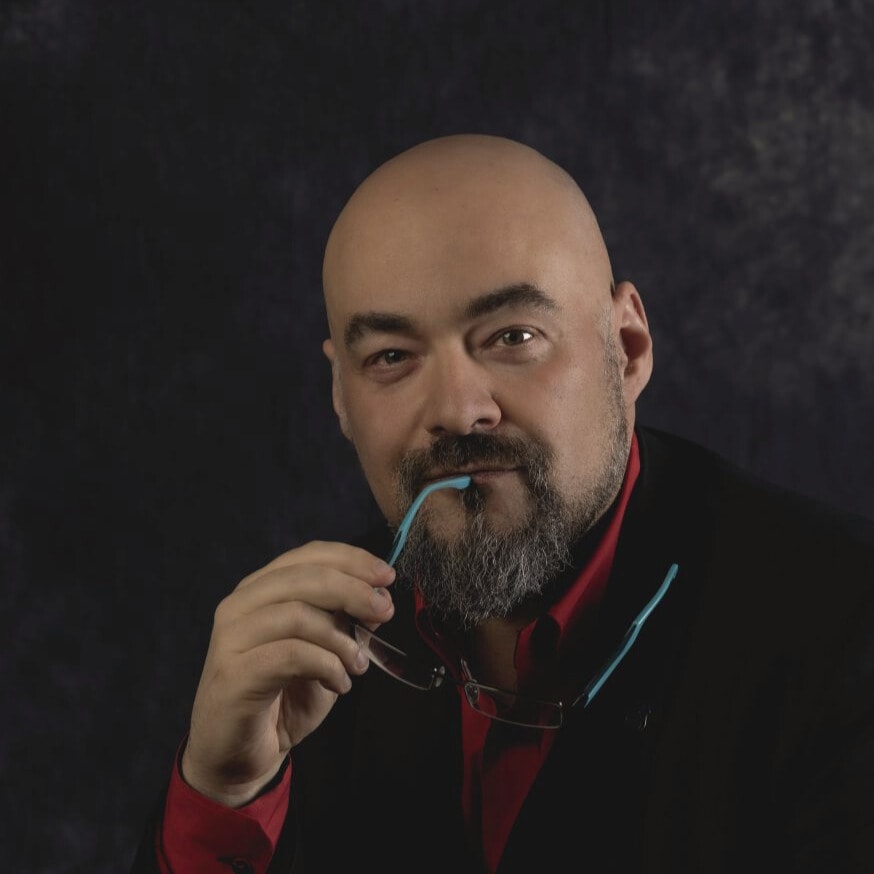
Wojciech Mościbrodzki
Lecturer, political scientist and artist, Civitas University
I am an academic lecturer, political scientist and artist. I am fascinated by technology, although traditional printmaking still has a special place in my heart...
I am an academic lecturer, political scientist and artist. I am fascinated by technology, although traditional printmaking still has a special place in my heart. I am interested in people, their role in society, boundaries and responsibility. More about my work and art can be found at www.wojmos.com

Ewa Majka-Janiak
Specialist family probation officer
I am a specialist family probation officer at the District Court for Warsaw Praga-North and a graduate of the Institute of Social Prevention and Resocialisation at the University of Warsaw...
I am a specialist family probation officer at the District Court for Warsaw Praga-North and a graduate of the Institute of Social Prevention and Resocialisation at the University of Warsaw. I have worked in the Old Praga district for 26 years and feel deeply connected to it. I am also a member of the local Interdisciplinary Team. I am fortunate that my work is also my passion.
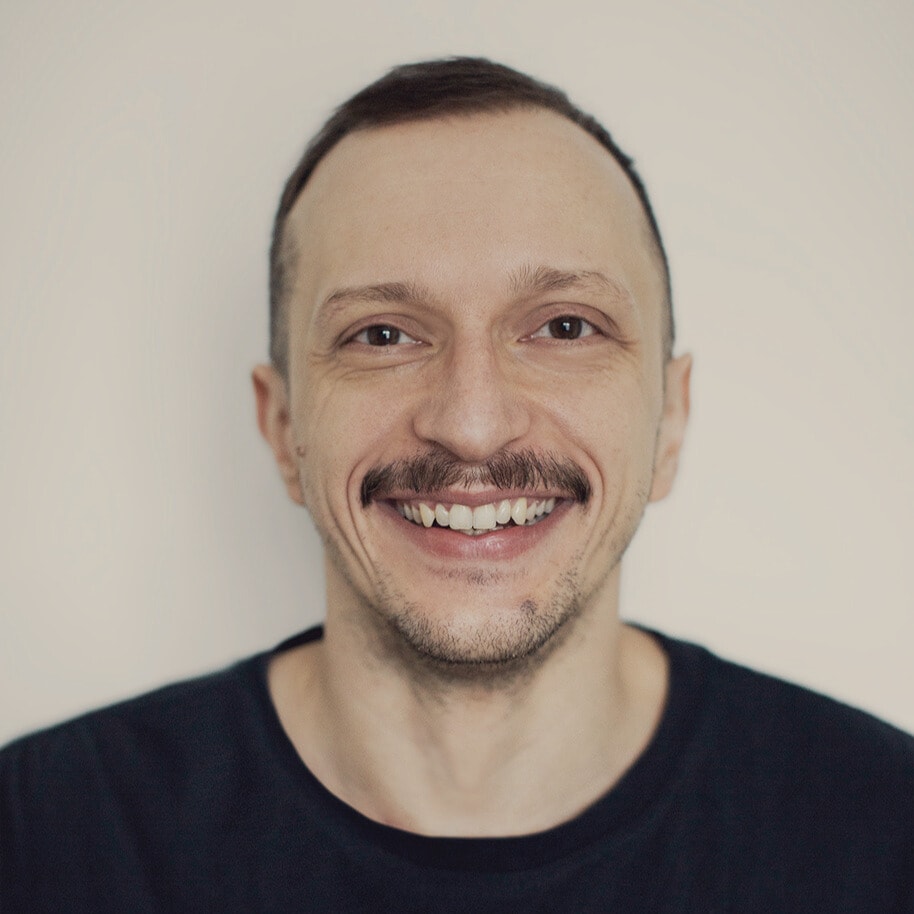
dr hab. Konrad Bocian
Academic lecturer, Professor at SWPS University
Hello, my name is Konrad Bocian and I am an associate professor at SWPS University, Faculty of Psychology in Sopot. My work focuses on moral, social and marketing psychology...
Hello, my name is Konrad Bocian and I am an associate professor at SWPS University, Faculty of Psychology in Sopot. My work focuses on moral, social and marketing psychology, especially on how people form moral judgements about themselves and others. I study biases in moral reasoning, moral development and moral conformity to better understand the psychological mechanisms shaping ethical decisions. I teach moral psychology, helping students explore the complexity of human behaviour and decision-making. Alongside teaching, I contribute to the academic community as an associate editor of Social Psychological Bulletin and the European Journal of Social Psychology.
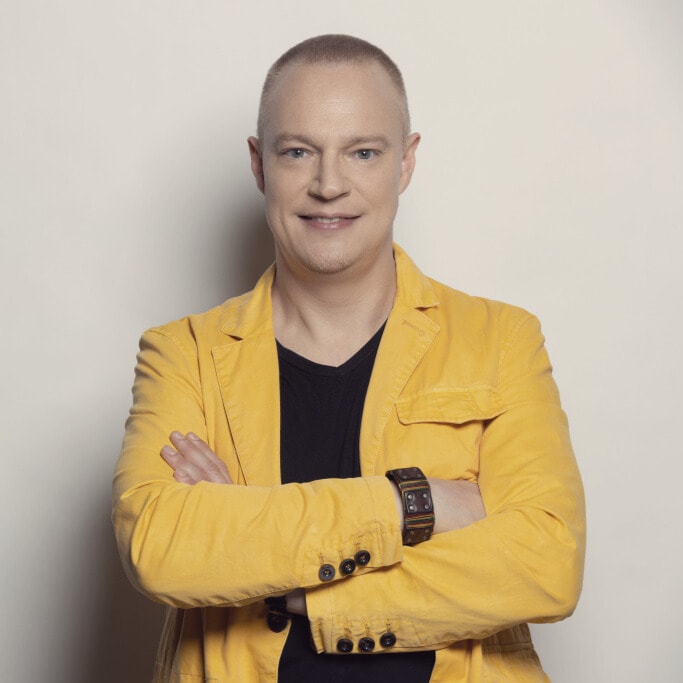
Łukasz Radzikowski
Psychologist, HR expert and lecturer, Civitas University
I am a psychologist with more than 20 years of HR experience. I have worked as a headhunter and managed teams of recruiters and sales specialists...
I am a psychologist with more than 20 years of HR experience. I have worked as a headhunter, managed teams of recruiters and sales specialists, and recruited for roles at every level. I also deliver projects involving change, cooperation between science and business, diversity and inclusion, and CSR. For 15 years I have worked with Civitas University, teaching several HR-related subjects. Privately, I am a Warsaw tour guide and study history at the University of Lodz. My selected publications and appearances cover management, diversity, workplace dress codes, career counselling, ESG and LGBT inclusion in organisations.

mgr Tomasz Prałat
Academic lecturer, Civitas University
I am an academic lecturer in management, economics and finance. I specialise in brand management, combining theoretical knowledge with practical experience...
I am an academic lecturer in management, economics and finance. I specialise in brand management, combining theoretical knowledge with practical experience. I am deeply passionate about education and believe that well-delivered knowledge can genuinely shape students' futures and support their professional development. I am a member of the Polish Economic Society and actively promote economic knowledge.

Aneta Siejka
Trainer and expert in communication, marketing and career design
My name is Aneta Siejka. I am a trainer and expert in communication, marketing and career design. I run Design Your Life workshops, helping people consciously design satisfying lives and careers...
My name is Aneta Siejka. I am a trainer and expert in communication, marketing and career design. I run Design Your Life workshops, helping people consciously design satisfying lives and careers. I create original training programmes in communication, management and design thinking. I work with NGOs, public institutions and ministries on social communication, and as a mentor I support companies from start-up stage through international expansion. I specialise in innovation, design thinking and the Google CSI method. I have worked for major brands including The Coca-Cola Company, TVN, T-Mobile, Bank Zachodni WBK, Kredyt Bank, Warta, Levi’s, Podravka, Onet.pl and Rainbow Tours, and co-created award-winning campaigns. I am a PhD candidate in management at the SGH Warsaw School of Economics and a graduate of the University of Warsaw.

Martyna Wojtczak
Psychologist, Founder of the Child Psychology Student Research Group
I am a psychologist. I founded the Child Psychology Student Research Group because working with children has long been close to me, both in practice and in research...
I am a psychologist. I founded the Child Psychology Student Research Group because working with children has long been close to me, both in practice and in research. I am currently completing an internship at the Centre for Research on Personality Development at the SWPS University Institute of Psychology and volunteering with the Mindset Foundation. My main research area is sharenting, meaning parents publishing images of their children online. I have presented my research at several nationwide academic conferences. I also run the Instagram profile @rodzicielskieotulenie, where I share child psychology knowledge, support parents and promote conscious, relationship-based parenting.
Practical guidance: How to respond?
Responding to violence requires judgement and attention to safety. The guidance below will help you act effectively without putting yourself at risk.
Distract the aggressor
Direct confrontation can be dangerous. Instead, try to distract the aggressor, for example by loudly asking for directions, pretending to be lost or mentioning that the police are approaching.
Call for help
Call the emergency number 112 or 986. Describe the situation and location precisely. If you cannot call, ask someone else to do it or use an emergency app.
Offer support afterwards
Even if you were unable to intervene during the incident, approach the person afterwards. Ask whether they need help, offer support and help them contact the emergency services.
Keep yourself safe
Your safety comes first. Respond in a way that does not put you in danger. Calling for help from a safe distance may be more effective than intervening directly.
Remember the details
Try to remember what the aggressor looked like, what they were wearing, their height and distinguishing features, and the direction in which they left. This can help the services find them more quickly.
Our Partners
Civitas University
A modern university with an established position in the education market, located in the heart of Warsaw on the 12th floor of the Palace of Culture and Science...
Civitas University is a modern university with an established position in the education market, located in the heart of Warsaw on the 12th floor of the Palace of Culture and Science. It stands out for its practical approach to education, specialist programmes created with employers and a high level of internationalisation.
Classes are taught by world-class experts in management, public administration, diplomacy and media. Students can build close mentor-student relationships and study comfortably in small groups.
civitas.edu.pl →
Mayor of Warsaw
The honorary patronage of the Mayor of Warsaw recognises initiatives of particular importance to Warsaw residents...
The honorary patronage of the Mayor of Warsaw recognises initiatives of particular importance to Warsaw residents and to building a positive image of the capital in Poland and abroad. We are pleased that STOP Znieczulicy na Ulicy was recognised as one of these initiatives.
um.warszawa.pl →
Warsaw Metropolitan Police Headquarters
The Warsaw Metropolitan Police actively supports social initiatives aimed at improving residents' safety...
The Warsaw Metropolitan Police actively supports social initiatives aimed at improving residents' safety. Officers share their knowledge and experience during training sessions and workshops.
ksp.policja.gov.pl →
Warsaw Municipal Police
For years, the Warsaw Municipal Police has actively supported the safety of the capital's residents, maintaining public order and supporting the city's development...
For years, the Warsaw Municipal Police has actively supported the safety of the capital's residents, maintaining public order and supporting the city's development in a spirit of responsibility and care for the common good.
Its role goes beyond visible patrols in public spaces. It provides real help in crisis situations, prevention and education, cooperation with event organisers, and action against violence and social threats. Municipal officers maintain order, protect public facilities, assist intoxicated people and those needing support, secure incident scenes and support emergency services.
The Municipal Police works with local communities, informs residents about risks and takes joint action to build a safer, more aware and more connected Warsaw. Its daily presence and readiness to respond make it an important part of the city support and safety system.
www.strazmiejska.waw.pl →
Palace of Culture and Science
An icon of the Warsaw skyline, a major events venue and one of the most recognisable buildings in Poland...
An icon of the Warsaw skyline, a major events venue and one of the most recognisable buildings in Poland. The Palace of Culture and Science is a place where history meets modernity, open to culture, education and social initiatives.
It houses theatres, cinemas, museums, research institutions and universities. Hundreds of events are held here each year, from prestigious congresses and concerts to local and community projects.
The Palace of Culture and Science is a shared space for all Warsaw residents and a symbol of integration, diversity and openness.
pkin.pl →
Women’s Rights Centre
The mission of the Centre for Women’s Rights is to counter all forms of violence and discrimination against women in private, public and professional life...
The mission of the Centre for Women’s Rights is to counter all forms of violence and discrimination against women in private, public and professional life. We seek to create conditions that enable women to exercise their human rights, including the right to live free from violence and discrimination, and to realise the constitutional principle of gender equality.
Our work is guided by the belief that:
women’s rights are an inalienable, integral and indivisible part of fundamental human rights, and violence against women, whether committed by a family member, another person, a group or the state, is a violation of those rights,
the state has a duty to protect women effectively against all forms of violence and discrimination and to pursue an active equality policy,
the state is responsible for failures to fulfil these obligations and for violations of women’s rights.
cpk.org.pl →
Empowering Children Foundation
The mission of the Empowering Children Foundation is to protect children from violence and sexual abuse...
The mission of the Empowering Children Foundation is to protect children from violence and sexual abuse. We provide children and their carers with a safe space, psychological support and legal assistance. We educate adults on how to respond when a child is being harmed or when abuse is suspected. We actively advocate for legal change and support parents in building relationships based on respect and understanding.
Our work is guided by the belief that:
every child has an inalienable right to a childhood free from violence and sexual abuse,
providing a safe space and psychological and legal support is fundamental to protecting a child,
educating adults and advocating for legal change are essential to effective prevention,
Responsibility for a child's wellbeing rests with the family, the state and society as a whole.
fdds.pl →
Masculinum
An organisation supporting men in personal development and challenging gender stereotypes...
Masculinum is an organisation supporting men in personal development and challenging gender stereotypes. We run workshops, training sessions and support groups.
masculinum.org →
Wyszkoleni.com
A professional training centre with more than 10 years' experience in first aid training...
We have provided first aid training for more than 10 years, offering courses tailored to the needs of different professional groups. Our mission is to spread first aid skills among employees and local communities.
Why us?
Professionalism and experience Our trainers have medical qualifications and many years of experience in emergency medical teams. Each instructor also has strong teaching expertise, ensuring high-quality first aid training. Over 10 years we have trained more than 11,000 people and equipped them with essential emergency response skills. Wyszkoleni.com First Aid Training is listed in the Register of Training Institutions and the Development Services Database.
Modern training equipment We use modern training equipment that allows practical exercises to reflect real emergency situations. This helps participants gain skills they can use in genuine crises.
Training tailored to different professional groups Our first aid courses are designed around the specific needs of different professional groups. We provide courses for managers, office staff, manual workers and teachers, adapting each programme to maximise the effectiveness of the skills gained.
Certified training Our courses end with a certificate confirming the knowledge and skills gained.
Our social initiatives Alongside corporate training, we actively support local communities and NGOs. We organise free first aid courses so that as many people as possible can gain essential life-saving skills.
Training in foreign languages We also provide training in English, German and Italian, allowing us to meet the needs of international companies and organisations.
Safety We emphasise safety during first aid, including the safety of the person receiving help, witnesses, other responders and the person providing assistance.
Psychological and emotional aspects We teach participants how to manage the emotions that arise when providing first aid, including techniques for dealing with paralysis and panic.
Prevention We emphasise prevention, especially of cardiovascular disease, to reduce complications such as stroke or heart attack, the most common cause of cardiac arrest.
wyszkoleni.com →
Dragon's Den Fight Club
A professional martial arts club specialising in self-defence training...
Dragon's Den Fight Club was founded in Warsaw in 2010. It now has three locations and offers combat sports training, including Brazilian Jiu-Jitsu, Muay Thai, freestyle wrestling and mixed martial arts.
We have repeatedly placed on the team podium at major grappling events, including the Polish BJJ Championships and Polish ADCC Championships. Our athletes include medallists at Polish, European and World Championships.
We offer excellent training conditions in our own heated and ventilated rooms equipped with mats and specialist combat-sports equipment. We run classes at different levels for adults, teenagers and children, separate sessions for women, modern parent-and-child classes and our own Family BJJ sessions. We believe combat sports can be practised by anyone, regardless of age or gender.
We belong to the Polish Wrestling Federation and are also part of the international Ze Radiola Team Association led by world champion BJJ coach Jose Olimpio da Rocha Neto. Dragon's Den regularly hosts leading fighters and coaches for training camps and seminars. We organise inter-club sparring, competitions and summer sports camps for children, teenagers and adults.
Whether you want to practise combat sports recreationally, gain practical self-defence skills or compete, Dragon's Den Fight Club offers the training you need. We invite you to our Warsaw locations in Praga-South, Sluzew and Lower Mokotow.
www.dragonsden.com.pl →
Papaj Gym
An intimate sports centre in Warsaw Praga created for the balanced development of body and mind...
Papaj Gym is an intimate space in Warsaw Praga created for balanced development of body and mind. We combine physical effort with relaxation and enjoyment, and we put people first.
We provide comfortable, high and spacious rooms equipped with modern training equipment. Personalised facilities combined with professional guidance from experienced trainers create a strong training experience. Group classes take place in a large fitness studio for up to 40 people. We also offer a sauna, relaxation area and a shop with dietary supplements.
For two years Papaj Gym has worked with a Caritas foundation facility on Kaweczynska Street, providing self-defence classes for girls and boxing classes for boys.
papajgym.pl →
Agencja Brandburger
A branding studio helping organisations create visual identities and build brand recognition...
A branding studio helping organisations create visual identities and build brand recognition. They design as if there were no tomorrow.
brandburger.agency →
Kulturalna
Kulturalna, a Warsaw club cafe and restaurant known for social engagement and ethical cooperation, is a campaign partner...
Kulturalna is a Warsaw club cafe and restaurant known for social engagement and ethical cooperation. From the beginning it has focused on socially responsible action and community building, employing people at risk of exclusion, supporting local initiatives and working to make the world a better place. Kulturalna believes good food is not only about responsible sourcing, but also about the energy of the people who create it.
Instagram →
Radio 357
One of Poland's most popular internet radio stations and a modern radio and podcast platform...
Radio 357 is one of Poland's most popular internet radio stations and a modern radio and podcast platform. It is a space for conversation and exchange of views, created by a community of listeners and trusted professional presenters. We broadcast live programmes available to everyone through our app and website.
We also create ambitious and distinctive podcasts worth making time for. The full podcast library is available on the Radio 357 website and app. We do not interrupt programmes with advertising blocks and operate thanks to funding from our listener community. Our team numbers more than 130 people, including journalists, producers, technicians and specialists in many fields.
poznaj.radio357.pl →
waw4free
Waw4free is a calendar of free and low-cost events in Warsaw for children and adults, including concerts, parties, screenings and more...
Waw4free is a calendar of free and low-cost events in Warsaw for children and adults. Concerts, parties, film screenings, theatre performances, workshops, lectures, exhibitions, stand-up, improv, walks, garage sales and many other free-entry events can all be found at waw4free.pl.
waw4free, because the best things are free!
waw4free.pl →Social media
Our event has one goal: to raise awareness and show how to respond SAFELY when we witness violence in public spaces. Have you ever witnessed violence? Have you wanted to react but not known how? We want to show that it is possible and necessary to respond wisely and safely...
#stopznieczulicy
We want Warsaw residents to feel safer. Together with our partners we organise self-defence training and Warsaw Metropolitan Police talks on how to respond safely in dangerous situations. Follow the event for registration updates.
#stopznieczulicy
The bystander effect is not simply indifference. It is a biological defence mechanism. Can it be seen in the brain? Research using MRI in simulated threat situations suggests that it can.
#stopznieczulicy
Our goal is to raise public awareness of passivity in the face of violence and show how important it is to start seeing one another again. We believe that responding to violence is not a heroic duty, but a natural human reaction in a society.
#stopznieczulicy
STOP Znieczulicy na Ulicy is a social campaign in the heart of Warsaw. Why do we so often walk past violence in public spaces? Why do we fail to respond when someone needs help? Social indifference is not only a lack of action. It can result from weakened social bonds, growing individualism and a loss of community. It is time to change that.
#stopznieczulicy