WE ARE BUILDINGWE ARE BUILDINGA SOCIETYA SOCIETYWHEREWHERETAKINGTAKINGACTIONACTIONAGAINSTAGAINSTVIOLENCEVIOLENCEISISTHE NORM,THE NORM,NOTNOTANANACT OFACT OFCOURAGE.COURAGE.
SocialIndifference
Violence is not an isolated incident or an exception — it is a phenomenon that affects a significant part of society in many different forms. Contrary to common assumptions, it is not limited to particular communities or high-risk groups.
The data documents its real scale, while one of the key mechanisms that allows it to persist is the inaction of witnesses. The statistics presented here reflect the real experiences of children, young people and adults who often receive no response from those around them in moments of crisis.
We do not simply run social campaigns — we live the change we want to create.
Responding is a skill that can be learned. Our programme is not merely an immediate response to a problem — it is a system designed to create lasting changes in attitudes. We are building a society in which responding to violence becomes a social norm and passivity is replaced by agency and awareness.
We combine scientific precision with practical training, bridging the missing link between knowledge and action. We implement our standard systematically across different areas of social life, based on three pillars that guide participants from mindful observation to safe intervention.
We are united by the belief that responding can be learned.
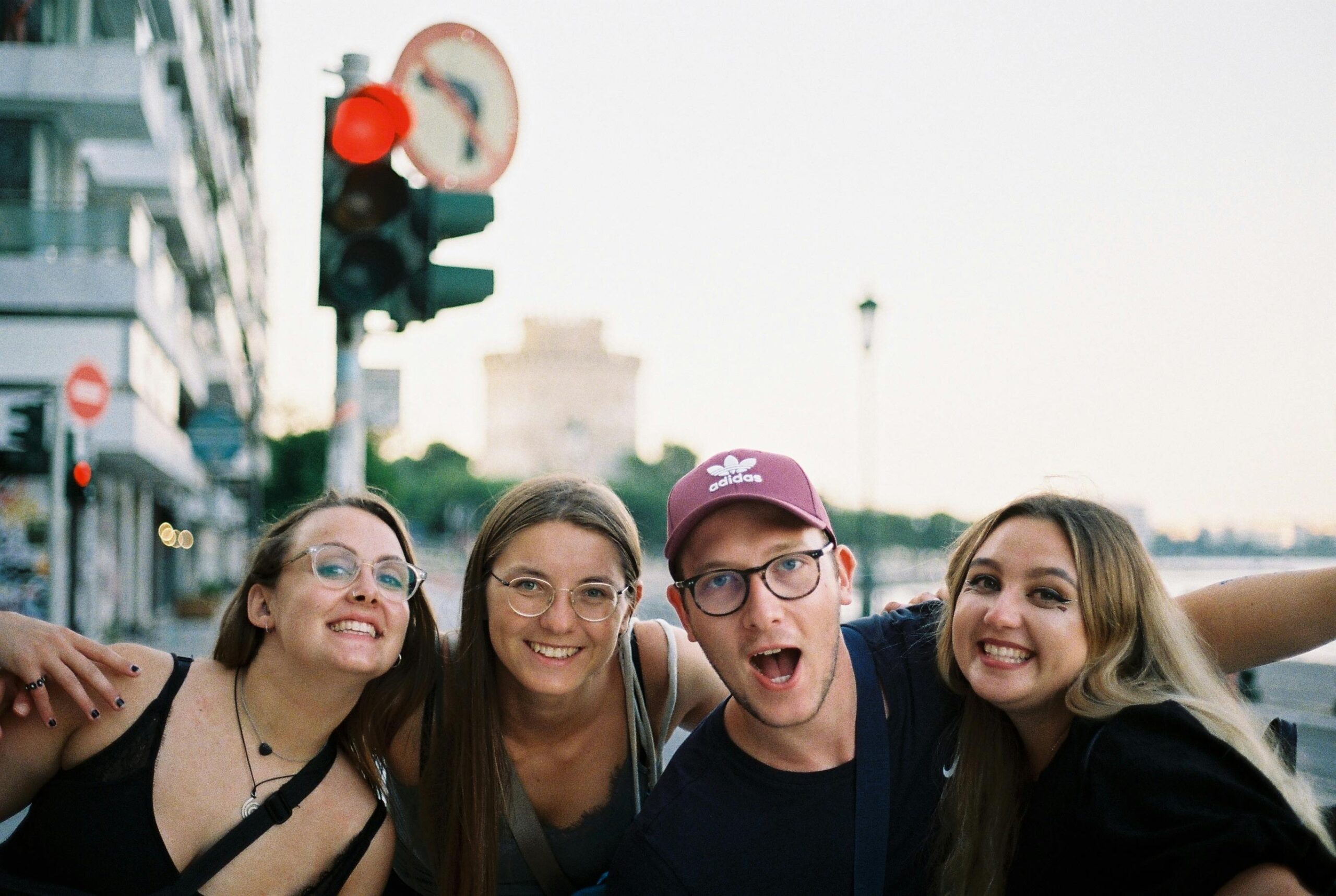
Just one year ago, this initiative was driven by one person. Today, nearly 30 people from across Poland are building it together.
We did not come together because we lived in the same city. We did not come together through a single organisation.
What brought us together was the belief that responding can be learned.
Today, STOP Znieczulicy is created by people from many different backgrounds:
psychologists
sociologists
lawyers
graphic designers, marketers and communications specialists
teachers, educators and students
Each of these people contributes their time, knowledge and experience because they believe that a culture of response does not emerge on its own. People create it.
Our foundations
A process we deliver across three areas
I See
I notice and understand. I learn to recognise the mechanisms of violence and signs of exclusion — both offline and online. This module teaches where the line lies between a joke and harm, and how to notice what others try to ignore. This is where change begins.
I Feel
I choose awareness. I focus on empathy and emotional intelligence. I learn to listen to others while clearly communicating my own needs and respecting boundaries — both mine and other people’s. I build the foundation for healthy relationships before a difficult situation arises.
I Act
I take action. I learn effective and safe ways to break the cycle of indifference. This module turns theory into practice, teaching conscious bystander behaviour and responsibility for what happens without the need to be a hero. My response matters.
I See
I notice and understand. I learn to recognise the mechanisms of violence and signs of exclusion — both offline and online. This module teaches where the line lies between a joke and harm, and how to notice what others try to ignore. This is where change begins.
I Feel
I choose awareness. I focus on empathy and emotional intelligence. I learn to listen to others while clearly communicating my own needs and respecting boundaries — both mine and other people’s. I build the foundation for healthy relationships before a difficult situation arises.
I Act
I take action. I learn effective and safe ways to break the cycle of indifference. This module turns theory into practice, teaching conscious bystander behaviour and responsibility for what happens without the need to be a hero. My response matters.
Do not stand by
Join the team that is changing the culture of response.
Understanding the mechanisms that drive us, both those that lead to taking action and those that cause passivity, is an invaluable lesson in how to respond.
Share your story: tell us about moments when you received support, situations in which you chose not to stay silent, or moments when you did not know how to respond. Every account helps us break down social barriers and educate others. We publish selected stories with commentary from our experts, giving the community practical tools for safe action.
Taking part is entirely voluntary — you can submit your story anonymously. If you choose to provide personal data, you have all rights granted under the GDPR, including the right to withdraw your consent and request deletion of your story at any time. Please remember — all published stories are anonymous.
⚠️ DO NOT include in your story: * the full names of other people (perpetrators, witnesses or people experiencing violence), * information that could identify other people (school name + class + date = identification), * sensitive data about other people (health information, sexual orientation or criminal convictions).
If your story concerns a minor, change any details that could identify them. The Foundation’s editorial team may edit or reject a story that breaches the above rules.
Practical guidance: How to respond?
Responding to violence requires judgement and attention to safety. The guidance below will help you act effectively without putting yourself at risk.
Distract the aggressor
Direct confrontation can be dangerous. Instead, try to distract the aggressor — for example by loudly asking for directions, pretending to be lost or mentioning that the police are on their way.
Call for help
Call the emergency number 112 or 986. Describe the situation and location precisely. If you cannot make the call, ask someone else to do it or use an emergency app.
Offer support afterwards
Even if you were unable to intervene during the incident, approach the person afterwards. Ask whether they need help, offer support and help them contact the emergency services.
Keep yourself safe
Your safety comes first. Respond in a way that does not put you at risk. Calling for help from a safe distance may be more effective than direct intervention.
Remember the details
Try to remember what the aggressor looked like — their clothing, height and distinctive features — and which direction they went. This may help the authorities identify them more quickly.
Where to get help
Intervention helpline for people facing a difficult life situation
(including people experiencing suicidal thoughts)
ul. 6-go Sierpnia 1/5 02-843, Warszawa (Ursynów-Pyry)