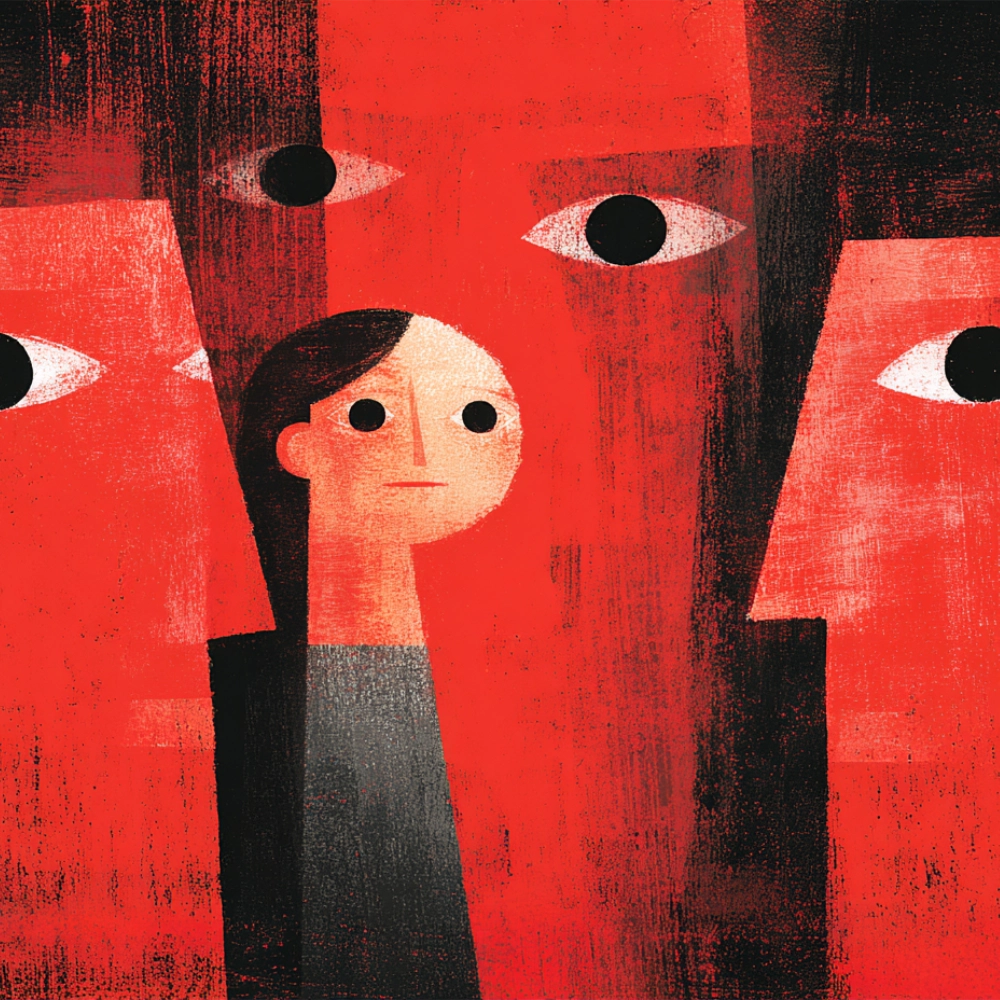
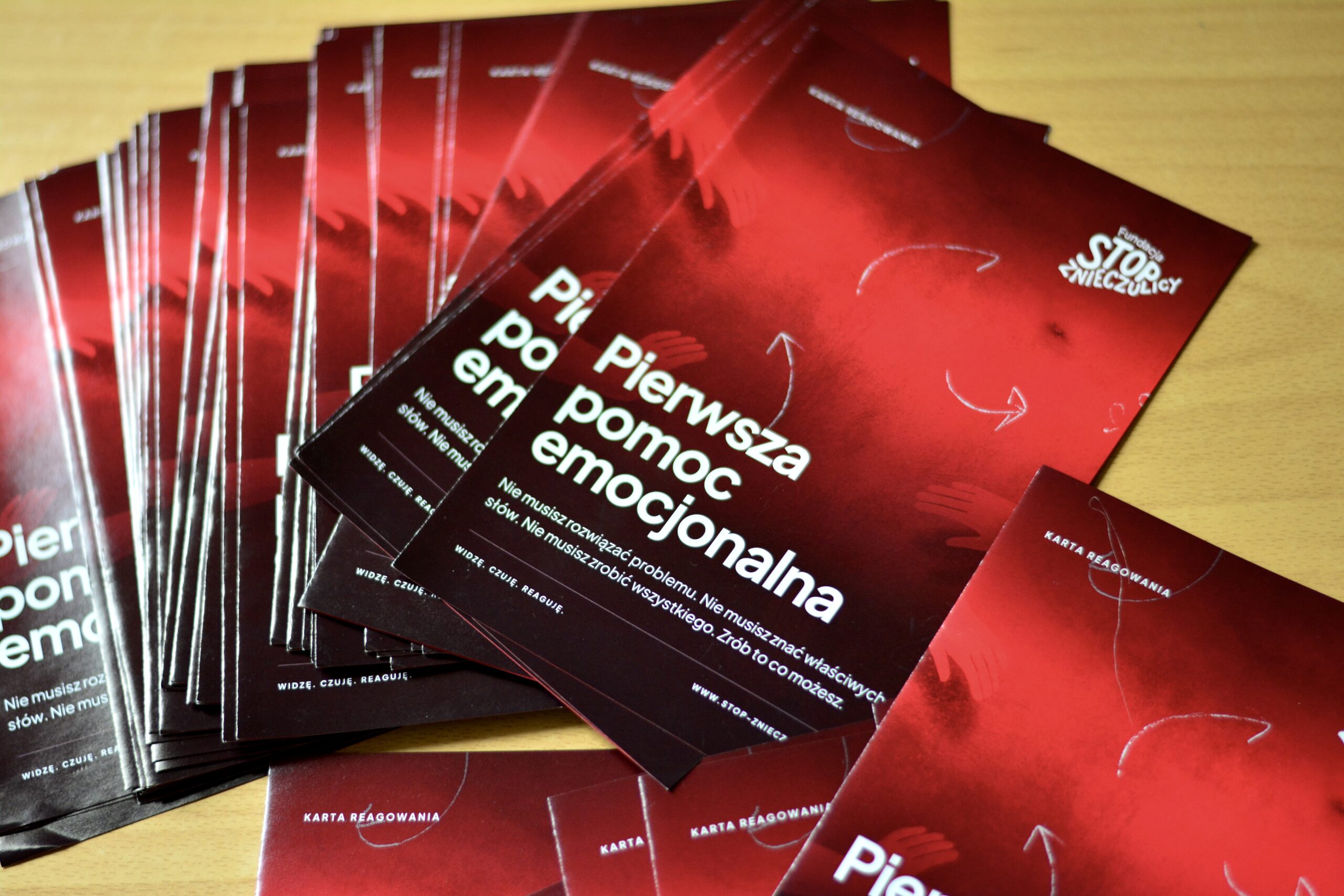
STOP Znieczulicy: Log Out of Indifference to ogólnopolska akcja, w której skupiliśmy się nie na samym hejcie i dezinformacji, a na postawie świadka. W świecie online bierność nie jest neutralna – to sygnał, który ma realne konsekwencje dla osób doświadczających przemocy. Uruchomiliśmy społeczną odpowiedzialność, ucząc, że bezpieczna reakcja nie jest bohaterstwem, a świadomą i bezpieczną reakcją.
Kampania realizowana jest w modelu synergii działań online-to-offline. Od maja do września prowadziliśmy wielokanałową edukację opartą na zasadzie „Nauka, nie przekonania”, tłumacząc mechanizmy psychologiczne i technologiczne, które formatują nasze zachowania w sieci.
Kulminacją projektu był Ogólnopolski Tydzień Edukacji (14–20 września) w PKiN w Warszawie, transmitowany na żywo do szkół w całej Polsce. Razem zbudowaliśmy odporność cyfrową, by reagowanie stało się społeczną normą.
Program wydarzenia
National Education Week, 14-20 September 2026 | Palace of Culture and Science, Warsaw
[ 14-18 September ]
Education Week for Schools
Lectures and workshops for secondary school students from across Poland, both in person and online.
14.09.2026
Why do we stay silent when others suffer? The psychological mechanisms of passivity and the role of the bystander
Team Europe Direct expert, PhD in social sciences, senior lecturer at the Department of European Studies, Institute of Political Science and Administration, University of Opole
Team Europe Direct expert, PhD in social sciences, senior lecturer at the Department of European Studies, Institute of Political Science and Administration, University of Opole
Taking part is entirely voluntary — you can submit your story anonymously. If you choose to provide personal data, you have all rights granted under the GDPR, including the right to withdraw your consent and request deletion of your story at any time. Please remember — all published stories are anonymous.
⚠️ DO NOT include in your story: * the full names of other people (perpetrators, witnesses or people experiencing violence), * information that could identify other people (school name + class + date = identification), * sensitive data about other people (health information, sexual orientation or criminal convictions).
If your story concerns a minor, change any details that could identify them. The Foundation’s editorial team may edit or reject a story that breaches the above rules.
Practical guidance: How to respond?
Responding to violence requires judgement and attention to safety. The guidance below will help you act effectively without putting yourself at risk.
Distract the aggressor
Direct confrontation can be dangerous. Instead, try to distract the aggressor — for example by loudly asking for directions, pretending to be lost or mentioning that the police are on their way.
Call for help
Call the emergency number 112 or 986. Describe the situation and location precisely. If you cannot make the call, ask someone else to do it or use an emergency app.
Offer support afterwards
Even if you were unable to intervene during the incident, approach the person afterwards. Ask whether they need help, offer support and help them contact the emergency services.
Keep yourself safe
Your safety comes first. Respond in a way that does not put you at risk. Calling for help from a safe distance may be more effective than direct intervention.
Remember the details
Try to remember what the aggressor looked like — their clothing, height and distinctive features — and which direction they went. This may help the authorities identify them more quickly.
Where to get help
Intervention helpline for people facing a difficult life situation
(including people experiencing suicidal thoughts)
ul. 6-go Sierpnia 1/5 02-843, Warszawa (Ursynów-Pyry)
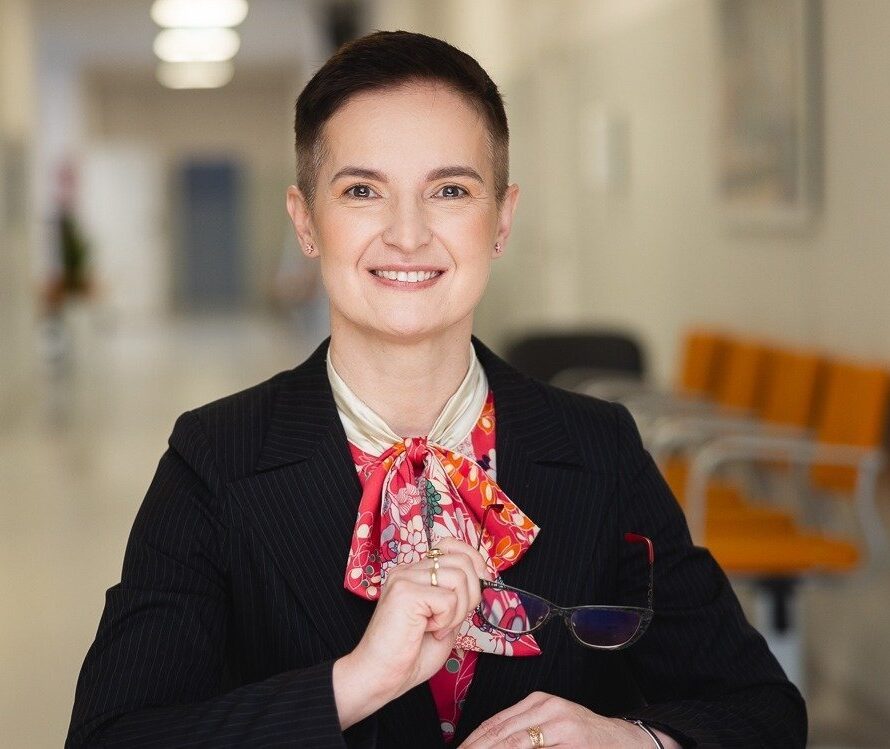
Trainer and psychotherapist qualified to lead training and therapy groups
I am a trainer and psychotherapist qualified to lead training and therapy groups. I graduated in Social Rehabilitation Pedagogy from the Maria Grzegorzewska University and completed a four-year integrative psychotherapy programme at the INTRA Centre, recommended by the Polish Psychological Association.
Since 2013, I have held a Ministry of Health certificate as an addiction psychotherapist. I currently run the Na Wszelki Wypadek Foundation. I have 19 years of training experience, working with doctors, pilots, dispatchers, lawyers and corporate teams in the pharmaceutical, IT, consulting and legal sectors.
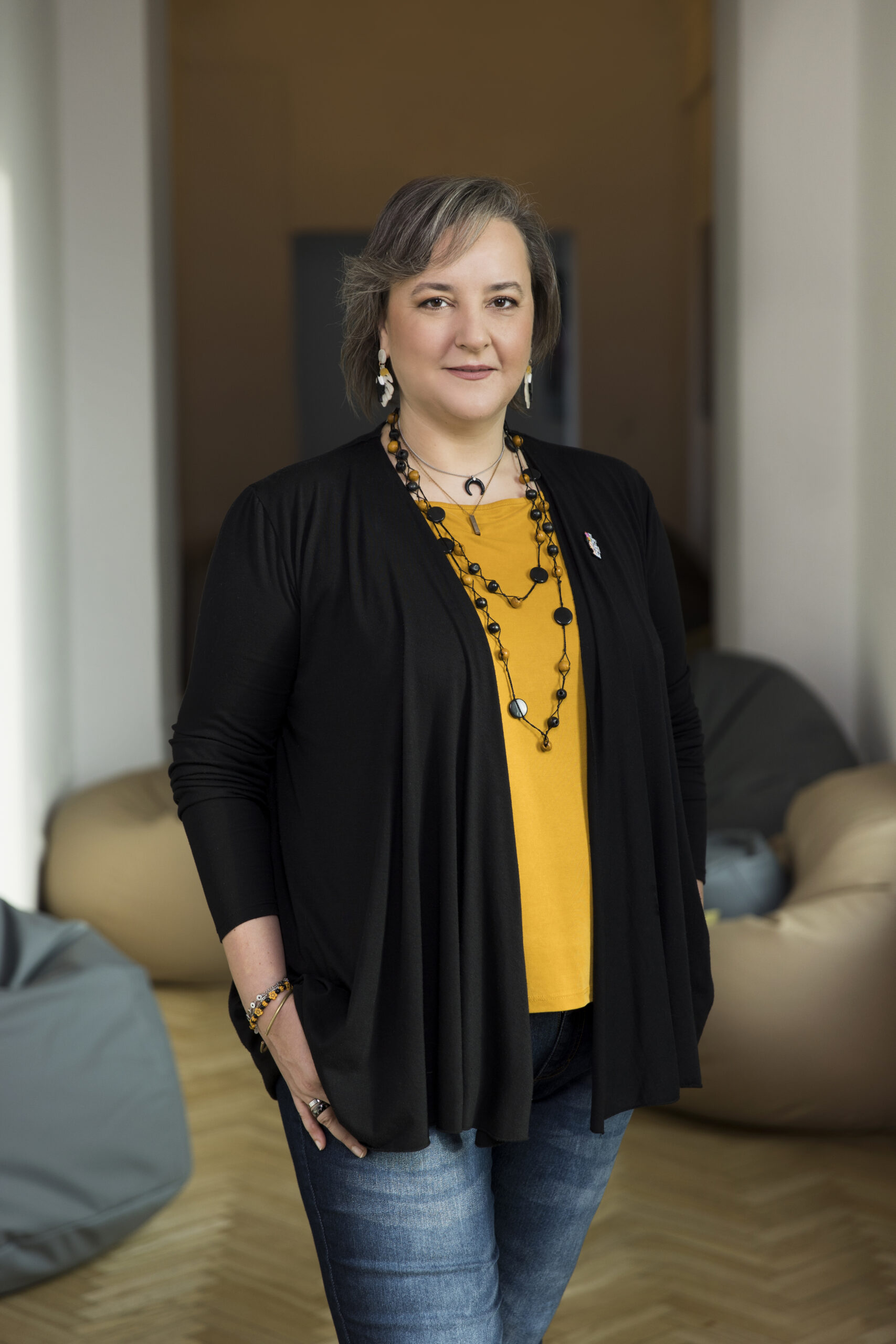
Dr Marlena Kondrat
President of the National Institute of Silver Economy, academic and research staff member at the University of Warsaw and lecturer at Civitas University
Her research focuses on the impact of the „silver tsunami” on economic processes and on managing generational diversity in organisations. At the National Institute of Silver Economy, she is responsible for the digital inclusion of older adults, creating educational programmes aimed at improving the digital skills of seniors in Poland. She takes part in parliamentary committee work, helps develop recommendations for the government on supporting older adults, and publishes on issues related to seniors and new technologies.
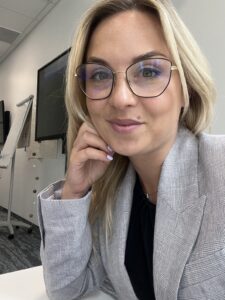
Dr Natalia Schiewe-Kopyra
Psychologist, psychotherapist and university lecturer
I completed doctoral studies at the University of Edinburgh, which gave me a strong academic and research foundation for working with the human mind. I now divide my professional path between science and practice: I lecture at Coventry University and run a private psychotherapy practice. In my therapeutic work, I combine the latest research-based academic knowledge with an empathetic, respectful and individual approach to each person.
Marcin Kasprzyk
Cybersecurity expert and lecturer
He pursues his educational mission at Coventry University Wroclaw, where as a lecturer he equips future heroes with their first digital armour and assigns quests that introduce them to the world of technology. At GlobalLogic, he works as a Competency Manager, designing skill trees for engineering teams in cybersecurity, cloud technologies and DevOps, and helping them level up. Before joining the command centre, however, he completed every difficulty level himself: from building foundations as an IT Infrastructure Engineer, through process automation in DevOps, to leading teams as an IT Manager. Today, he shows how to move from player to architect of a safer digital world.
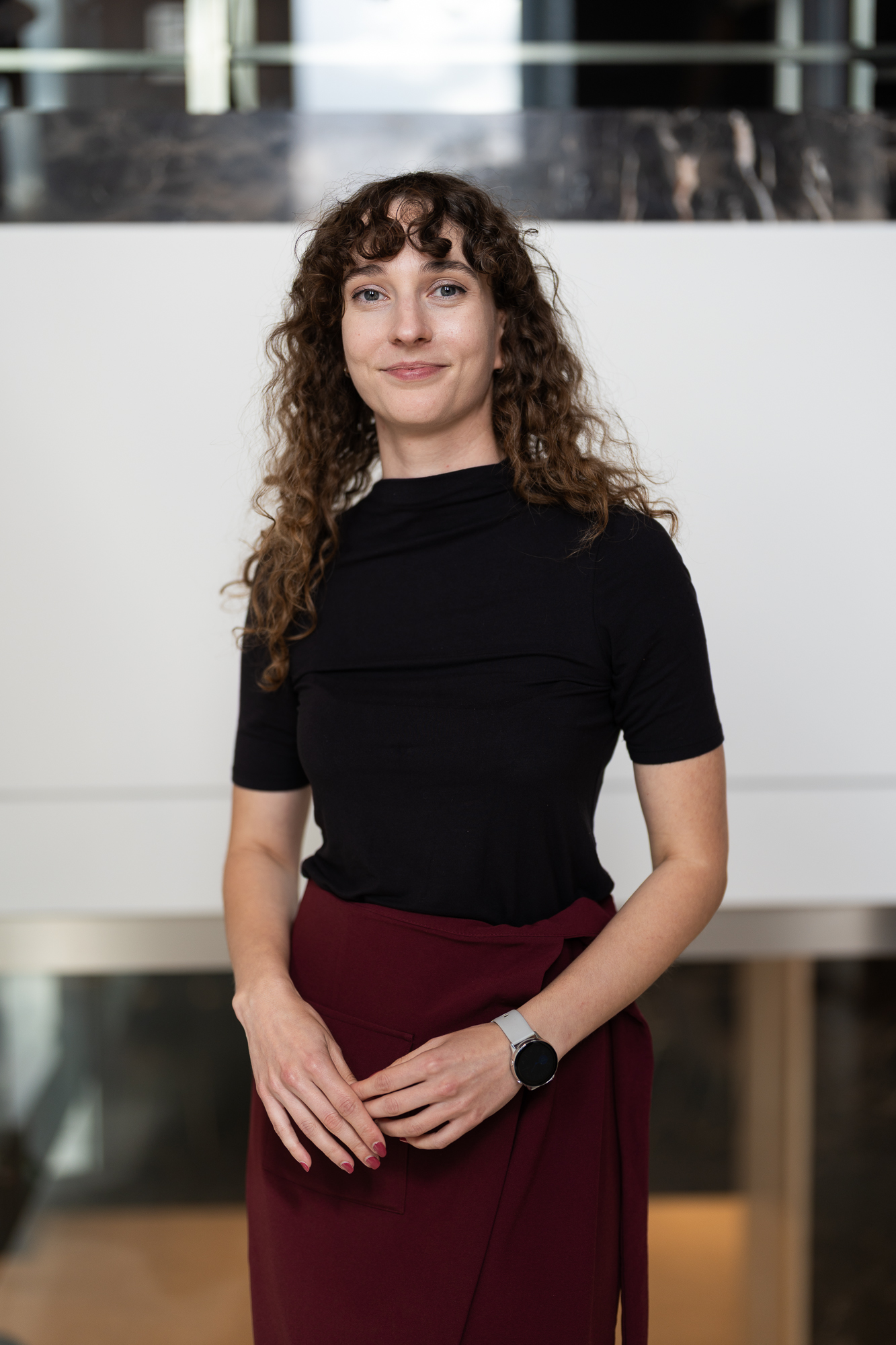
Martyna Wojtczak, MA
Child and adolescent psychologist and researcher of young people's functioning in digital environments
Psychologist and researcher. She works with children and young people in a primary school, nursery school and psychological counselling centre. She collaborates with the Centre for Research on Personality Development at SWPS University and the Mindset Foundation. Her research interests include sharenting and children's presence in digital spaces. Her work combines scientific knowledge with psychological practice, focusing on supporting the mental wellbeing of children and young people.
Dr Agnieszka Bukowska
Sociologist, educator, therapist, mediator and group trainer
I work as an assistant professor at Civitas University, where I head the Centre for Research on Social and Economic Risks. My work covers social influence, manipulation, radicalisation and extremism. I combine an academic perspective with therapeutic and educational practice. I run training sessions and workshops that help people better understand mechanisms of social influence, group behaviour and contemporary social risks.
Aleksandra Musielak
Child and adolescent psychologist, educator and university lecturer
Uniwersytet WSB Merito w Gdańsku A specialist in child and adolescent psychology and developmental psychology, with degrees in psychology and clinical psychology, and a psychosexologist. She works in Solution Focused Brief Therapy and has completed intensive Nonviolent Communication training. She is a member of the Polish Psychological Association and an academic teacher. She has served as deputy head of both public and non-public primary schools. She provides psychological consultations for children, young people and parents, and delivers workshops, lectures and training. She also popularises psychological knowledge. Her articles have appeared on wysokieobcasy.pl and in academic and professional publications. She has appeared in several episodes of the PSYCHE Radio Zet podcast and provides expert commentary to local and national media. She speaks at conferences and takes part in debates on the mental health of children and young people, and is involved in projects dedicated to this area.
Wojciech Deptuła
Lawyer specialising in international matters, professionally associated with the public sector
He currently heads the Department of International Cooperation and Human Rights at the Ministry of Justice.
Małgorzata Wójcik
Lecturer at WSB Merito University. PhD candidate at the Doctoral School of Cardinal Stefan Wyszyński University
Lecturer at WSB Merito University and doctoral candidate at the Doctoral School of Cardinal Stefan Wyszynski University in Warsaw in the field of social communication and media. She teaches leadership and human resources management, including managerial skills, team leadership, business ethics and project management. At the same time, she has more than 25 years of business experience. She specialises in designing and implementing organisational development strategies, building systems that support employee potential, and managing change in complex institutional environments. As a coach, mentor and facilitator, she works at the intersection of individual development and team dynamics, strengthening decision-making and communication skills. She is an AI in education ambassador and holds certifications in Artificial Intelligence and Machine Learning at EQF levels 4 to 6. She was the Polish Public Speaking Champion in 2018, a title awarded by Toastmasters International.
Dr Ewa Kosowska-Korniak
Doctor of law, mediator appointed by the Minister of Labour for collective disputes, expert in mediation and communication
Doctor of law, development and business trainer, mentor in mediation and relationships, professional mediator, mediator appointed by the Minister of Labour for collective disputes, mediator at the Mediation Centre of the Polish Chamber of Commerce and mediation trainer, and President of the O-media Communication Institute. She is a Motivational Interviewing trainer, workshop trainer and member of the Polish Psychological Association, as well as a change mentor. She is a certified MBSR mindfulness teacher. She combines legal, psychological and educational knowledge in mediation and educating future mediators. She runs original postgraduate programmes at WSB Merito University in Opole, Wroclaw and Warsaw, as well as business courses and training. She is the creator of the Wyspa Inspiracji podcast, an expert in communication and development, a mentor and a three-time TEDx speaker. She is passionate about mediation, meaningful conversation and attentiveness to others.
Joanna Szulc
Psychologist, journalist and editor, expert on the MLODE GLOWY project.
Psychologist, journalist and editor, and expert on the MLODE GLOWY. Openly about mental health project. She also studied sociology and completed courses in supporting parents and CBT psychotherapy for children and adolescents. She writes articles and books for parents, including Kochaj i pozwol na bunt. Jak towarzyszyc nastolatkom w dorastaniu. She contributes to Wysokie Obcasy, Newsweek Psychologia Dziecka and Newsweek Psychologia Nastolatka. She also writes stories for children for the monthly magazine Swierszczyk and creates psychoeducational stories.
Agata Kuszner
Expert with 8 years of experience in cybersecurity and media education
An expert with eight years of experience in cybersecurity and media education. She develops and coordinates initiatives that help children and young people use the internet safely and consciously. She combines experience in large educational projects with practical work with young people. In her workshops, she focuses on turning cybersecurity knowledge into concrete skills that are useful in everyday life. She coordinates national and international educational projects, including activities connected with Safer Internet Day, the Safer Internet Conference and the Plik i Folder project. In her work with young people, she prioritises practice, engaging exercises and open discussion about what the digital world really looks like from their perspective.
Dorota Gross
Founder and co-founder of the KODO Foundation
Founder and co-founder of the KODO Foundation, which promotes emotional education and digital wellbeing. She owns a personal data protection consultancy and is an expert in information protection and data security. For more than seven years, she has trained teachers, parents and young people in responsible use of technology. She works with UKEN and IF PAN, combining her knowledge and interest in sociology and neurobiology with a mission to build a culture of responsibility in the digital world.
Dominika Nowakowska-Grela
Analysis Support Specialist in the Narrative Trends Analysis and Fact-Checking Team
For nearly seven years, she worked with non-governmental organisations and provided legal oversight of their activities. Her interests focus on the human factor, the influence of psychological mechanisms on behaviour, and the historical conditions shaping social attitudes. Her work covers disinformation concerning the European Union and migration, as well as techniques and mechanisms used to spread false narratives. She pays particular attention to the impact of disinformation on social behaviour and decision-making.
Alicja Martinek
Artificial intelligence expert at the NASK AI Safety Research Centre
Her work focuses on multimodal analysis of fake and deepfake materials. By examining audio tracks, content and visual layers, she develops algorithms that support the work of disinformation analysts. Alicja is also a doctoral candidate at AGH University in Krakow, a speaker at numerous industry and academic conferences, and a science communicator.
Dominik Tylman
CIO, expert in cybersecurity management and data protection at the National Labour Inspectorate
A graduate in computer science and law who also completed cybersecurity management studies at Kozminski University. He is responsible for the security of key digital systems in a public institution, where he develops strategic protection procedures, manages risk and leads technical teams in crisis situations.
He combines technological expertise with legal and social perspectives, showing that cybersecurity is not only about algorithms, networks and systems, but above all about people and their everyday decisions. He understands the digital environment and its risks, while believing that effective protection begins with cooperation, trust and a well-prepared team. His principle is that in cybersecurity, just as in life, no one should be left alone in a difficult situation.
Sara Lewicka
Arabist, political scientist and PhD candidate in political science and public administration - Civitas University
I graduated in applied linguistics (French with Arabic) from the Faculty of Languages and in international relations from the Faculty of Political Science and Security Studies at Nicolaus Copernicus University in Toruń. I am currently a doctoral candidate in social sciences, specialising in political science and public administration, at the Doctoral School of Kazimierz Wielki University in Bydgoszcz.
My academic interests focus on Arabic and Islamic studies in the historical and contemporary context of the Arab world, as well as international relations and security studies. I am particularly interested in regional organisations, asymmetric conflicts, terrorist organisations, proxy wars and failed states in the 21st century.
I won the student and doctoral competition for best paper at the 8th International Congress of the Arabic Language (Al-Muʼtamar ad-Duwalī aṯ-Ṯāmin li-l-Luḡa al-'Arabiyya), organised in 2018 by the International Council for the Arabic Language (Al-Maǧlis ad-Duwalī li-l-Luḡa al-'Arabiyya).
I am a member of the Polish Oriental Society and the Polish International Studies Association. I serve as Deputy Head of the Centre for Asian Economies at Civitas University and as academic supervisor of the Societas Internationalis student society.
Dr Krzysztof Martyniak
Sociologist and social educator, PhD in social sciences
A graduate of the Institute of Sociology at the University of Warsaw, the Faculty of Social Sciences at the University of Gdansk, and the Helsinki Foundation for Human Rights. He is currently a member of the Youth Pedagogy Team operating within the Committee on Pedagogical Sciences of the Polish Academy of Sciences, and of the working group Between Participation and Exclusion. He also regularly leads sociotherapeutic classes at a secondary school in Warsaw.
Krystyna Pulsson
Educator raising awareness of hidden abuse and mentor in women's transformation
Author of the Architecture of Women's Transformation model, the book Wild Woman and the guide Language of Hidden Abuse: Through the Eyes of a Survivor, which is currently being prepared for publication. She is one of the first female voices in Poland to combine the world of finance with lived experience of domestic abuse and was featured in Forbes Women (1/2026). Formerly a finance director and investment banker, she now works in renewable energy. She provides mentoring, consulting and talks on the mechanisms of domestic abuse and women's transformation. On LinkedIn, she publishes the newsletter Kobieca Moc w Akcji.
Ewa Kirsz
Digital educator and mental skills trainer
A digital educator and mental skills trainer associated with the Education Support Department at the KEN Pedagogical Library in Warsaw. She delivers training and workshops for adults, showing how to use new technologies and artificial intelligence consciously in education. She has a degree in psychology, which enables her to combine knowledge of development and wellbeing with practical solutions for teachers, parents and young people. She is the creator of the Tech Talk podcast about the digital world and a recipient of the 2024 List 100 distinction recognising digital leaders in Poland.
Klaudia Topolska
Cybersecurity expert and parent educator
For more than a decade, I have looked for weak points where everyone else assumes things are secure. Professionally, I manage technology risk in a bank, which means asking every day what might go wrong before it actually does. When I became a mother, I realised that my role had changed: a child's safety is not only about cables, passwords and restrictions, but also emotions, behaviour and psychology. That is why I now combine IT with cyberpsychology. As a Cyber Ambassador and mentor with the IT Girls Foundation, I teach new technologies to every age group, from preschool children to teenagers, and I help parents become digital guides rather than screen guards. I created Cyber Wilczycy, an educational project that explains mechanisms instead of relying on lists of prohibitions and helps parents build confidence in their children's digital world.
Dr Paulina Piasecka
Expert in security, hybrid warfare and disinformation
I hold a doctorate in social sciences in security studies and specialise in hybrid warfare, international terrorism and information warfare. I am Director of the Centre for Terrorism Studies at Civitas University and an expert in security and information analysis. I also work on disinformation, manipulation and contemporary information threats. Through my educational work, I promote security awareness and teach people to use information consciously.
Ilona Adamska
Expert in countering online hate and hate speech
One of Poland's most recognisable experts on countering hate speech, online hate and verbal abuse in schools, public life, media and business. A philosopher and ethicist, she completed a three-year doctoral programme at Cardinal Stefan Wyszynski University in Warsaw. She combines academic knowledge, extensive professional experience and her personal story to speak about hate, empathy, responsibility for words and respectful relationships in an authentic and engaging way. She created the nationwide social campaign Nie hejtuje - motywuje, which has reached nearly 50,000 students as well as hundreds of companies, institutions and organisations across Poland. Through meetings, workshops, lectures and educational initiatives, she shows how to counter verbal abuse, respond to hate and build a culture of communication based on empathy and mutual respect. She is the author of the books Hejt bez filtra and Sila pozytywnego nastawienia. Jak skutecznie radzic sobie z hejtem i wzmocnic poczucie wlasnej wartosci, combining reflection on contemporary social issues with practical tools for resilience, self-esteem and responsible communication. A TEDx speaker, she regularly appears at business and social conferences in Poland and abroad. She also lectures at Jakub B. Baczka's Academy of Mental Trainers and is regularly invited by radio and television programmes as a media expert on hate speech, verbal abuse, empathy and responsible communication.
Edyta Kozdroń
Expert in social education and digital skills
An expert in designing and delivering social projects, a trainer, and a co-creator of teaching materials and educational programmes for young people, adults and public institutions. For years, she has developed and coordinated educational projects that combine social issues with digital technologies, creating training materials and running workshops on social skills, digital skills and conscious use of new technologies. She helps people understand how social media works, how technology affects attention and wellbeing, and how to build healthier digital habits.
Andrzej Mroczek
Expert in organised crime, criminal activity, terrorism and criminal terror.
An expert in organised and criminal crime, terrorism and criminal terror. He specialises in criminology, forensic science and emergency and crisis management. His research and expert work focuses on identifying and assessing threats, recognising behavioural indicators of criminal activity and analysing the reliability of testimony. He also works on practical approaches to responding in situations involving danger and violence. He is Deputy Director of the Centre for Terrorism Studies at Civitas University and supervisor of the Student Criminology Research Group. He previously served in the Warsaw Metropolitan Police unit for combating criminal terrorism and homicide, as well as in the special services. He also worked as a chief specialist in the Counter-Terrorism Threats Division of the Public Security Department at the Ministry of the Interior and Administration. He co-authored the first Presidential Strategic National Security Review and the White Book on National Security of the Republic of Poland, and is a member of the expert team of the Dowod Niewinnosci Foundation.
Mateusz Szelepajło
Legal adviser, university lecturer and podcaster
Attorney-at-law, university lecturer and podcaster. He specialises in criminal and administrative law and has professional experience in courts, the prosecution service and a law firm. He lectures at WSB Merito Szczecin and WSAP in Szczecin, where he teaches legal and AI-related subjects. Privately, he is an enthusiast and advocate of a healthy approach to artificial intelligence, an active member of the ON.AI association, and the creator and host of the social and cultural podcast Szklanka do polowy pelna and the true-crime podcast Mistrz i Uczen.
Patrycja Wonatowska
Psychologist, sexologist and psychotherapist
Psychologist, sexologist and psychotherapist working in solution-focused therapy and currently pursuing certification in an integrative approach, as well as a sexuality educator. She lectures at SWPS University in Poznan and is an expert with the SEXED.PL Foundation. In her therapeutic and educational work, she focuses on psychosexual health, relationships, intimacy, boundaries and the diversity of human sexuality. She combines psychological, sexological and social perspectives, drawing attention to the impact of shame, stereotypes and social expectations on wellbeing and sexual life.
Dr Dota Szymborska
Doctor of humanities in ethics, graduate in philosophy and sociology
Doctor of humanities in ethics, graduate in philosophy, specialising in logic, and sociology, specialising in applied social sciences, at the University of Warsaw. An academic, lecturer and two-time TEDx speaker, she also spoke at IMPACT'26 and promotes high ethical standards in research and business applications of artificial intelligence. She leads a research team working on an AI assistant and is a member of a research centre focused on implementing artificial intelligence in education and management. As an assistant professor at WSB Merito University in Warsaw, she applies philosophical and sociological theories in teaching practice. Since March 2024, she has been a member of the AI working group GRAI at the Ministry of Digital Affairs and currently serves as acting leader of the AI, law and democracy section. She was named one of the ten most influential women in data science in Poland in 2024 and recognised as a Strong Woman in IT in a global report in 2025. In her free time, she runs or plays golf.
Ewa Domańska
Expert on online safety for children and young people at NASK's Cyber Threat Prevention Department
Since 2018, she has been involved in initiatives supporting the digital safety of children and young people, including the development of educational programmes and materials for schools, teachers and parents, as well as social campaigns. She specialises in problematic internet and digital device use and the impact of social media on children and adolescents.
Patrycja Krzyśpiak
Senior External Threat Analyst at the NASK Disinformation Analysis Centre
Expert on Chinese influence operations, including the use of AI and influencers in propaganda and disinformation.
dr Błażej Choroś
Team Europe Direct expert, PhD in social sciences, senior lecturer at the Department of European Studies, Institute of Political Science and Administration, University of Opole
Expert in the Team Europe Direct network at the Representation of the European Commission in Poland. His academic work focuses on European politics, political communication and disinformation, and he researches elections and political representation in Poland and the European Union. He is a graduate of the Human Rights School of the Helsinki Foundation for Human Rights. For years, he has delivered workshops and lectures on disinformation, digital resilience and the European Union.
Anita Wiesiołek-Németh
Cybersecurity expert, Women Go Cyber
Passionate about people and digital transformation, she has worked in technology and cybersecurity for more than 24 years. As Deputy Director of the Cybersecurity Department at CIRF, she is responsible for the security of a large public organisation and builds teams that respond to cyber threats. She is a graduate of the University of Warsaw, the University of Lodz and Kozminski University, with expertise in cybersecurity management, psychology in management, economics and sales management. She is a certified Lead Auditor for Information Security Management Systems under the international ISO/IEC 27001 standard and an experienced mentor in the Women Go Cyber programme and the Institute for Strategic Studies.
Her work combines a management perspective, knowledge of cyber threats and an understanding of human behaviour. She believes the internet is not only technology: it is created by people, their emotions, choices and reactions. She shows how to protect privacy, approach change and differences with curiosity, and stop harm before further clicks amplify it.
Privately, she is the mother of a talented final-year secondary school student, a technology and team-sports enthusiast, and the owner of a cat named Aura. She believes that in the digital world we are also playing for the same team and that each of us helps create a good atmosphere online, because a single click, word or response can make a difference.
Agata Smolak
Expert in education, youth and innovation
I am President of the BigBang Foundation, a researcher and designer of educational innovations. For more than a decade, I have created projects that help young people find their way in the world of work, technology and constant change. I combine non-formal education with research and the practical use of new technologies, especially VR, AR and artificial intelligence.
I work with schools, universities, businesses and public institutions. I design educational programmes, deliver training and talks, build international partnerships and develop VR simulations that build social and professional skills. I am particularly interested in the future of education, Generation Z, cooperation between schools and business, and preparing people for changes in the labour market. For nearly a decade, I have also pursued academic work on education, future skills and social change.
I like connecting worlds that too often operate separately: science with practice, technology with people, and ambitious ideas with concrete action. I believe good education should do more than transfer knowledge. It should build agency, courage, curiosity and readiness to shape one's own future. Those are exactly the kinds of experiences I try to design. In my private life, I love mountain hiking and English Cocker Spaniels.